
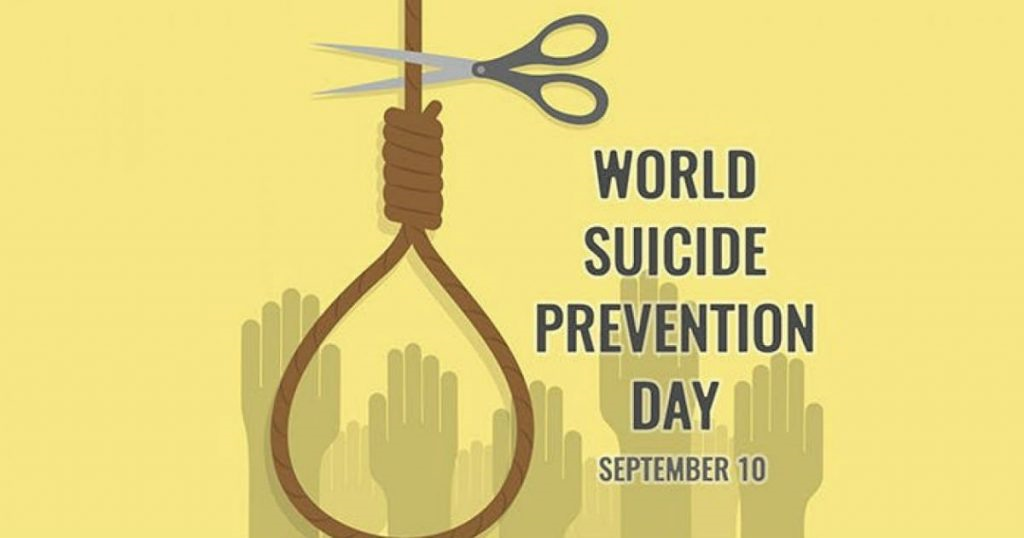
World Suicide Prevention Day (WSPD) is observed on 10 September every year, in order to provide worldwide commitment and action to prevent suicides, with various activities around the world since 2003.
An estimated one million people per year die by suicide or about one person in 10,000 (1.4% of all deaths), or “a death every 40 seconds or about 3,000 every day”. As of 2004, the number of people who die by suicide is expected to reach 1.5 million per year by 2020.
The recent 2019 study concluded that 108 million people bereaved by suicide worldwide every year.
The prevention of suicide has not been adequately addressed due to a lack of awareness of suicide as a major public health problem and the taboo in many societies to openly discuss it. Raising community awareness and breaking down the taboo is important to make progress in preventing suicide.
“The main suicide triggers are poverty, the loss of a loved one, academic failures, family issues especially dowry or any financial issues, unemployment, chronic health issues, and legal or work-related problems, etc,
Strategies to prevent suicides
To ensure suicides are controlled and subsequently reduced we need to adhere to the following:-
- We need to reach people who don’t seek help, and hence, don’t receive treatment when they are in need of it.
- We need to develop and implement awareness campaigns, with the aim of increasing awareness of suicidal behaviors in the community
- We need to target our efforts not only to reduce risk factors but also to strengthen protective factors, especially in childhood, adolescence, and the elderly.
- We need to train health care professionals to better understand evidence-based risk and protective factors associated with suicidal behavior.
As a clinical psychologist, through practice, experience, and research; we realize multiple lines of evidence indicating that the COVID-19 pandemic has profound psychological, economic, and social effects. These sequels may persist for months and years to come. The last six months of this pandemic are already associated with distress, anxiety, fear of contagion, depression, insomnia, acute stress disorder, and imminent post-traumatic stress disorders among the general population and healthcare professionals. Social isolation, uncertainty, chronic stress, exhaustion, pain, hopelessness, the risk for infection, burn-out among frontline workers, a general fear of fatality, pay cut, loss of job & economic difficulties have led to the development or exacerbation of pre-existing psychiatric disorders and made most of us vulnerable. Stress-related conditions including mood & substance use disorders, domestic violence are linked with suicidal behaviors.
The COVID-19 survivors are also at increased suicide risk. Consequently, the risk of suicide has globally peaked. It is imperative to proactively work on decreasing stress, anxiety, loneliness, and aimlessness in the general population. ( Strategies to prevent suicides – Times now article on 10/9/20)
The theme of this year(2020) – “Working Together to Prevent Suicide”